The 12th House
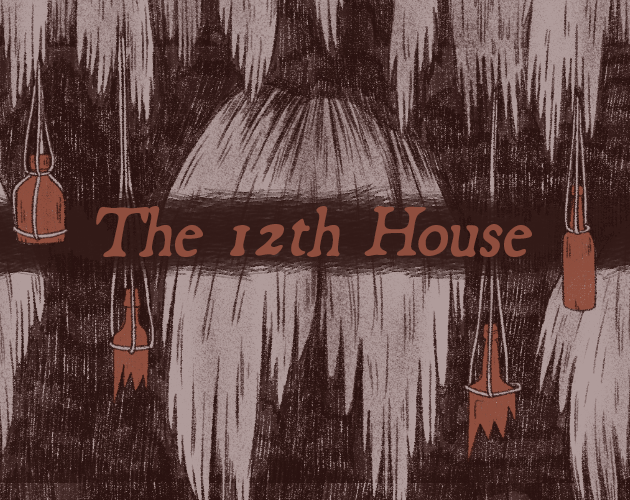
The 12th House is a story in which you have inherited your ancestral home. You contemplate on what to do with the house as you reflect on your family, their treatment of you, and what this house means to you. An exploration in how the cycles of our families effects us and what we can do to break them.
This project was initially made in spring 2025 as a capstone project for my creative writing class in grad school. I wanted to learn Twine and try interactive narrative, so I expanded on the original story.
The original, handmade paper fold out house made for grad school can be found here.
I also have a digital version of the original paper house that can be interacted with here.
All artwork and writing is by me, K Downs.
Audio is from Freesound.org
For more of my work, please visit my website.
For more writing, subscribe to my Substack K's Scribes & Scribbles.
Comments
Log in with itch.io to leave a comment.
The art style stands out immediately, walking a fine line between eerie and oddly charming. It shares an off-kilter, transgressive pastoral sensibility with David Lynch, Joseph Mugnaini, Andrew Wyeth, and American Gothic painters, but never feels derivative. The limited palette and stylization sharpens the tone without calling attention to itself. It’s idiosyncratic, rather than idiomatic, but in the best possible ways.
The writing has a kind of dreamlike precision—atmospheric without drifting. The second-person point of view draws the reader into a compact, interior space that feels both personal and disquieting. Psychological tension runs just beneath the surface—psychoanalytic in tone—especially in the flashbacks and vignettes. Both endings land with quiet weight. The pacing, at times, could use more room to breathe; exposition occasionally takes the place of lived action. Even so, it holds together as a focused character study, balancing Southern Gothic textures with psychological insight. It suggests more beneath the surface—and rewards a closer look between the cracks of its symbolic imagery.
The sound design starts strong, if not slightly too loud, which ironically, contributes to the oppressive atmosphere of the narrative. The cicada calls immediately ground the piece in time and place, evoking something close to Higurashi. The same is true for the drones and other natural sounds that populate the narrative. Nevertheless, the absence of music, though, feels like a missed layer. A few well-placed cues—ambient or tonal—might have added resonance to the atmosphere already present. That said, finding the right creative alignment is often harder than it looks, especially in such a saturated digital space.
One complaint is that the text choices fade-in slowly, but this is a personal preference, rather than a development oversight.
I’m glad I spent time with this. It lingers. I’ll likely return to it again, not just to revisit the details, but to see where things go from here. A strong, thoughtful debut.